


TomiKiwa 富癸輪


Tomikiwa — A Geiko Beyond Tradition
In the ancient city of Kyoto, where centuries-old traditions continue to flourish behind wooden lattice doors and within the intimate world of the hanamachi, there are women who dedicate their lives to preserving the elegance, artistry and cultural heritage of Japan.
Among them is the Geiko Tomikiwa, a remarkable figure whose journey into Kyoto’s traditional entertainment world is as unusual as it is fascinating.
Unlike most women who enter the profession through the customary apprenticeship as a Maiko — a young apprentice learning the intricate disciplines of traditional dance, music, etiquette and hospitality — Tomikiwa embarked upon a different path. She made her professional debut directly as a Geiko, bypassing the Maiko stage altogether.
Such an entrance is uncommon in Kyoto’s deeply traditional geisha community, where the progression from Maiko to Geiko has long been regarded as an important rite of passage. Tomikiwa’s story therefore represents a fascinating intersection between tradition and individuality, demonstrating that even within one of Japan’s most carefully preserved cultural institutions, there remains room for exceptional journeys.

This photographic series seeks to capture not merely the outward beauty of a Geiko, but the quiet dignity, grace and individuality of a woman whose career began along a less conventional path.

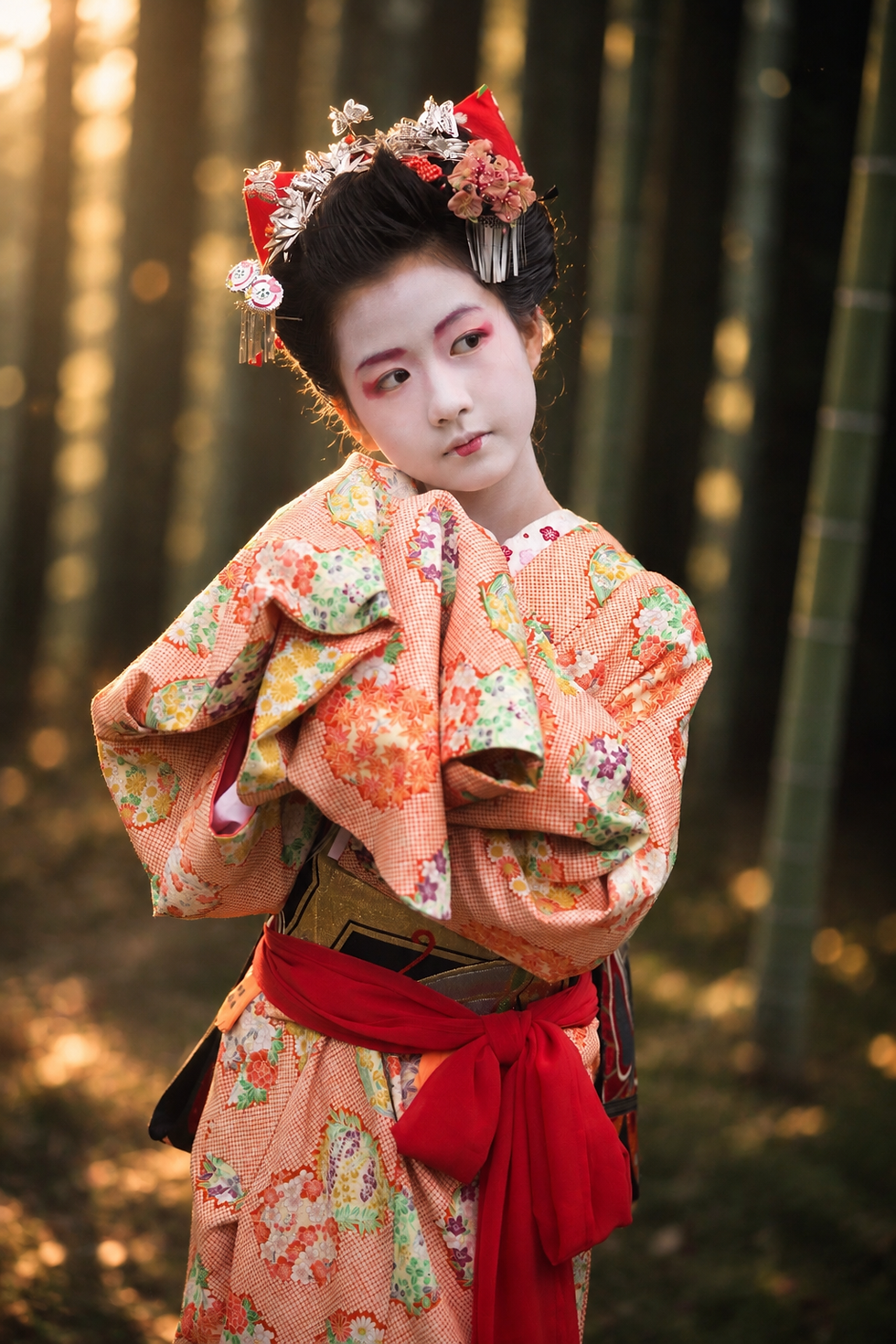
Photographed within the intimate surroundings of a traditional Kyoto interior, Tomikiwa appears in a succession of contemplative moments. Dressed in an elegant kimono, her elaborate coiffure and immaculate white makeup evoke the timeless aesthetics of Japan’s classical entertainment culture.
An ornate textile depicting cranes provides a richly symbolic backdrop. In Japanese culture, cranes have long represented longevity, good fortune and fidelity — fitting emblems for a photographic exploration of cultural continuity.
Traditional temari balls, with their intricate geometric embroidery, introduce another dimension of Japanese craftsmanship. Once treasured as decorative gifts and symbols of affection and good fortune, these delicate objects echo the meticulous artistry that defines the world of the Geiko.


In one portrait, Tomikiwa sits quietly before a traditional lacquered mirror, her expression introspective and serene. In another, she delicately examines a temari ball, transforming an ordinary gesture into a moment of poetic stillness. Elsewhere, a folding fan and a fox mask introduce subtle references to the theatrical traditions, symbolism and mystery of Japanese performing arts.
The decision to present these photographs in black and white is deliberate.
By removing colour, the images move beyond the immediate splendour of the kimono and decorative surroundings, inviting the viewer to concentrate instead on expression, gesture, light and shadow. The resulting photographs possess an almost cinematic quality, recalling the visual language of classical Japanese cinema and the atmospheric portraiture of an earlier era.
The interplay between soft natural light and deep shadows creates a sense of intimacy, as though the viewer has been granted a fleeting glimpse into a private world normally hidden from public view.

Yet beyond the beauty of the photographs lies a deeper narrative.
Tomikiwa’s unconventional entrance into the profession reminds us that tradition is not necessarily static. It survives through the individuals who embrace it, interpret it and carry it forward into another generation.


Her story is one of individuality within continuity — a rare personal journey unfolding against the backdrop of an extraordinary cultural inheritance.
Through this series, I hope to celebrate not only the elegance of Tomikiwa, but also the enduring spirit of Kyoto: a city where the past remains vividly present, and where even the most ancient traditions continue to find new expressions.

Comments