


Aoi Tayu 葵太夫

Aoi Tayu — The Living Elegance of Old Kyoto
An Encounter with a Living Legend
In the ancient city of Kyoto, where centuries of tradition linger among secluded temples, autumn gardens and quiet stone pathways, the extraordinary beauty of Japan’s classical performing arts continues to endure.
At the heart of this portrait stands the legendary Aoi Tayu, an embodiment of the elegance, refinement and cultural heritage of old Japan.
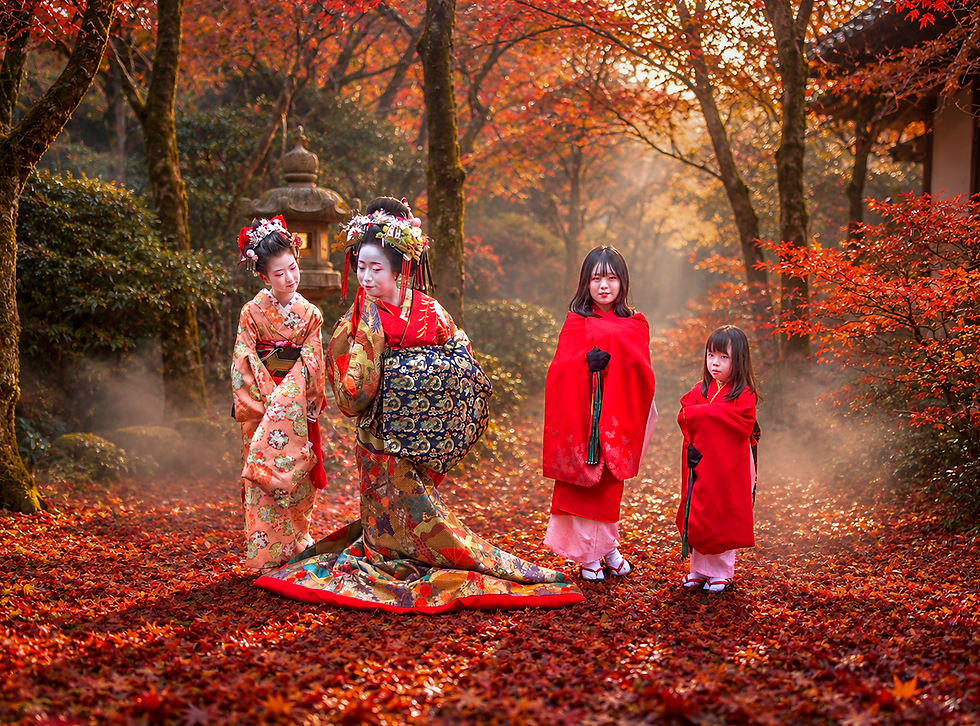
Dressed in an exquisitely embroidered kimono, adorned with elaborate traditional hair ornaments and accompanied by her young attendants and Shoume, Aoi Tayu presents a scene seemingly untouched by the passage of time.
The Tayu tradition represents one of the most sophisticated expressions of Japanese classical culture. Far more than figures of beauty, Tayu were accomplished practitioners of traditional arts, celebrated for their mastery of music, dance, poetry, conversation and ceremonial etiquette. Their elaborate attire, distinctive hairstyles and graceful movements reflect a world in which artistry and refinement were cultivated to extraordinary heights.
In this portrait, the splendour of that heritage unfolds against the breathtaking colours of Kyoto’s autumn.
A carpet of crimson maple leaves stretches beneath the figures, while the surrounding trees glow with shades of amber, copper and fiery red. The magnificent textiles of Aoi Tayu’s ceremonial costume echo the richness of the landscape, creating a visual harmony between human artistry and the natural world.
Beside her, the child attendants, dressed in brilliant red, introduce an atmosphere of innocence and continuity. Their presence evokes the passing of traditions between generations, a reminder that Japan’s cultural treasures survive not merely through preservation, but through the people who continue to embody them.
Shoume completes this remarkable gathering, adding another dimension of grace and companionship to the composition.
There is an almost theatrical stillness to the scene. The figures appear suspended between history and the present, as though they have stepped out of an ancient Japanese painting and into the autumn light.
Yet this is not simply a recreation of the past.
It is a portrait of a living tradition.
Through this photographic encounter, Aoi Tayu becomes a bridge between centuries, carrying forward the beauty, discipline and artistic sophistication of a world that has largely disappeared from everyday life.
The photograph celebrates not only the extraordinary visual splendour of Kyoto’s traditional culture, but also the individuals who devote themselves to keeping its spirit alive.
For a fleeting moment, beneath the autumn maples of Kyoto, the past and present become one.
And in the quiet splendour of falling leaves, the elegance of old Japan lives on.
The photo locaation is Joshoji. Joshoji is closely linked to the Edo Period courtesan, Yoshino Tayu, known for her exceptional beauty and grace. According to the tales, Yoshino Tayu either eloped with her lover, the merchant Haiya Joeki, or he paid for her release from her Shimabara tea house. A devout follower of Nichiren Buddhism, Yoshino Tayu is credited with contributing to the financing of the striking vermillion gate at the temple's entrance, named Yoshino-mon in her honor. Yoshino Tayu passed away at the tender age of 38, and her grave, adorned with a tall stone pillar, is located within the temple grounds, alongside that of her partner Haiya Joeki. Josho-ji Temple conducts a memorial service for Yoshino Tayu annually on the second Sunday of April. The service includes a procession of tayu, a small number of whom remain in Kyoto, dressed in stunning kimono, as well as an open-air tea ceremony and a captivating ikebana exhibition within the temple premises.
Joshoji Temple is well-known for its lovely garden which is particularly popular during the autumn leaf viewing season in Kyoto during autumn and for its cherry blossoms in Spring.

Comments