


Shoume 少女

Traditionally, the original path to becoming a Tayū in the Shimabara pre-WW2 looked something like this:
禿, Kamuro –> 少女, Shoume –> 天神, Tenjin –> 太夫, Tayū
Generally, it takes about 10 years to train to become a Tayū.


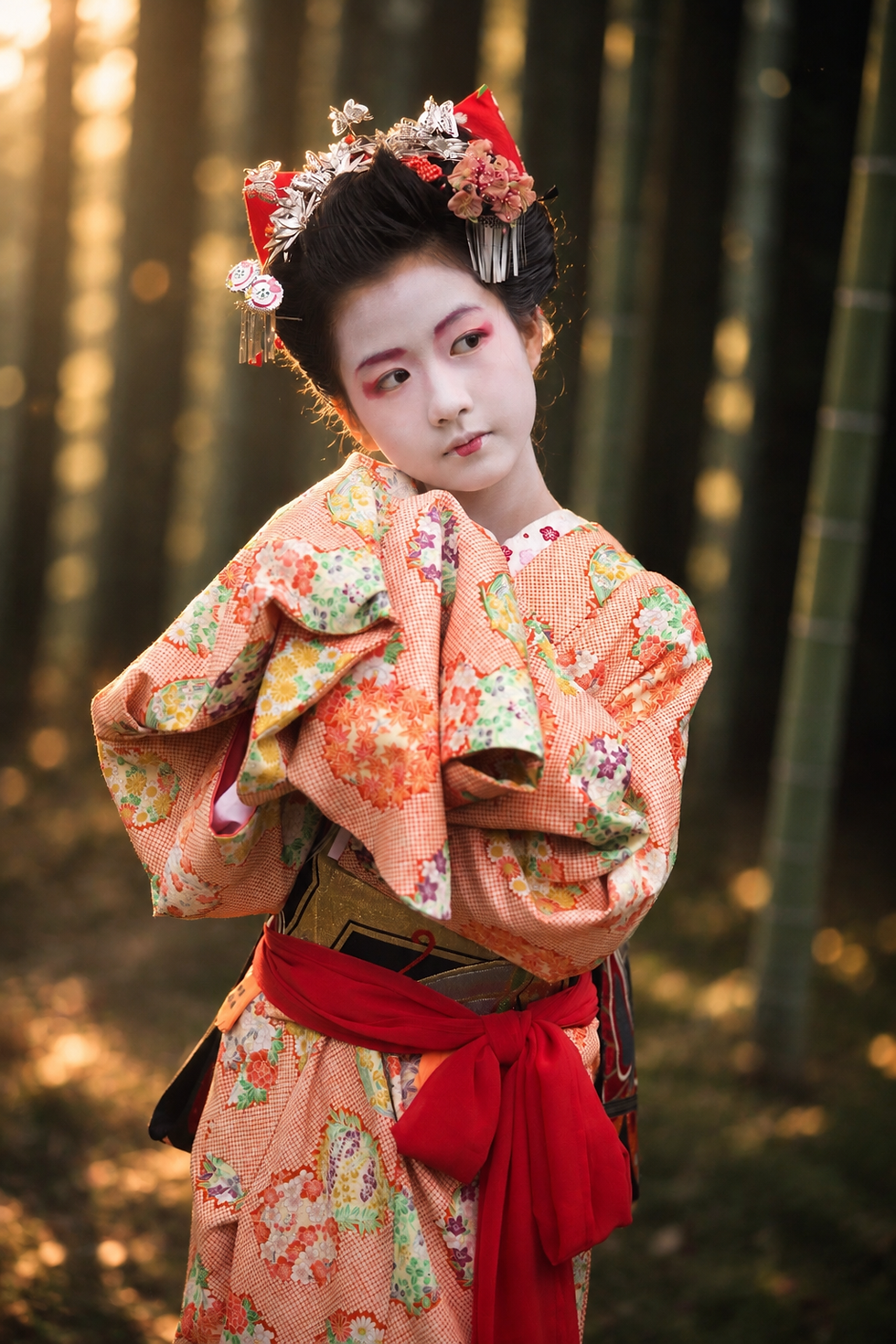
In the ancient city of Kyoto, where centuries of tradition linger among quiet gardens and bamboo groves, a young girl named Shoume steps into a world of timeless Japanese beauty.
Dressed in an exquisite peach-coloured kimono adorned with delicate seasonal blossoms, Shoume embodies the innocence, elegance and quiet grace of childhood. Her elaborate coiffure, embellished with intricate silver ornaments, crimson ribbons and floral kanzashi, evokes the splendour of Kyoto’s traditional performing arts.
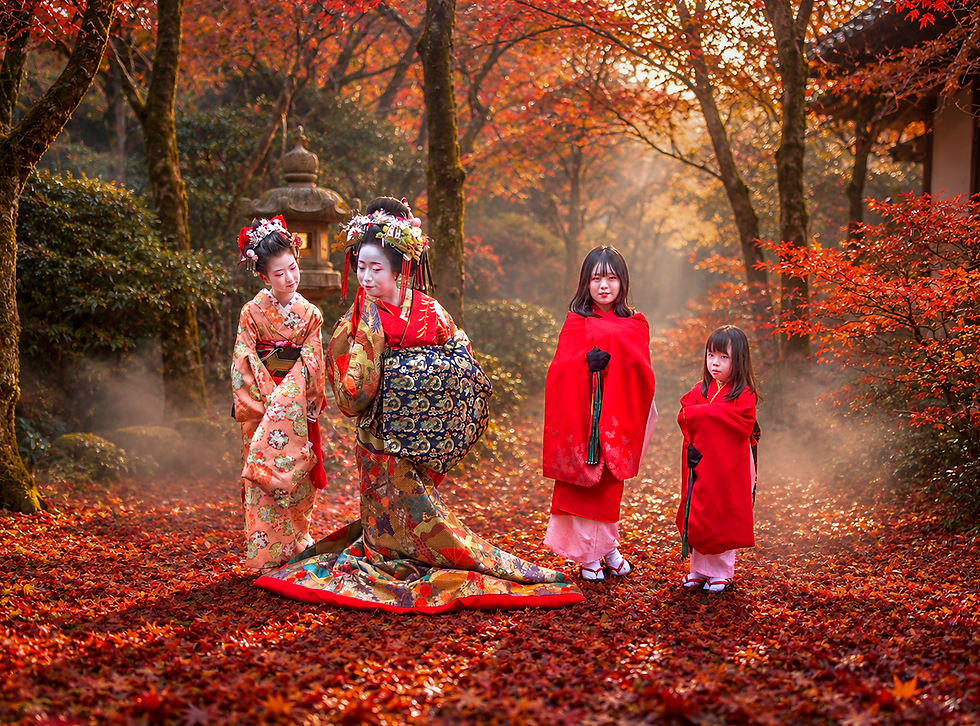
Against the fiery colours of autumn, her porcelain-white complexion and expressive eyes create a striking contrast with the warmth of the surrounding landscape. Each portrait reveals a different facet of her character — a fleeting downward glance, a contemplative gaze, a moment of youthful curiosity, or a quiet expression of serenity.
Among the most intimate images in the series is a tender encounter with the legendary Aoi Tayu. With a gentle gesture, the elaborately dressed Tayu reaches towards Shoume’s face, creating a poignant moment that suggests affection, guidance and the passing of cultural traditions from one generation to the next.


The changing autumn scenery becomes an essential part of the visual narrative. Crimson maple leaves frame the portraits like delicate brushstrokes, while golden sunlight filters through towering bamboo, transforming the woodland into an almost dreamlike setting.
There is a deliberate stillness to these photographs. Rather than portraying grand theatrical gestures, the series celebrates the subtleties of expression, the extraordinary craftsmanship of traditional Japanese attire, and the quiet beauty found in moments between movement and repose.

Shoume — Whispers of Autumn in Kyoto is ultimately a photographic meditation on innocence, heritage and the passage of time.
Through a cinematic interplay of light, colour and emotion, the series seeks to preserve something both fleeting and enduring: the delicate beauty of youth set against the timeless cultural traditions of Japan.
The photo locaation is Joshoji. Joshoji is closely linked to the Edo Period courtesan, Yoshino Tayu, known for her exceptional beauty and grace. According to the tales, Yoshino Tayu either eloped with her lover, the merchant Haiya Joeki, or he paid for her release from her Shimabara tea house. A devout follower of Nichiren Buddhism, Yoshino Tayu is credited with contributing to the financing of the striking vermillion gate at the temple's entrance, named Yoshino-mon in her honor. Yoshino Tayu passed away at the tender age of 38, and her grave, adorned with a tall stone pillar, is located within the temple grounds, alongside that of her partner Haiya Joeki. Josho-ji Temple conducts a memorial service for Yoshino Tayu annually on the second Sunday of April. The service includes a procession of tayu, a small number of whom remain in Kyoto, dressed in stunning kimono, as well as an open-air tea ceremony and a captivating ikebana exhibition within the temple premises.
Joshoji Temple is well-known for its lovely garden which is particularly popular during the autumn leaf viewing season in Kyoto during autumn and for its cherry blossoms in Spring.

Comments