


Legend of the White Snake 白蛇傳 白蛇伝
- Robin Yong

- 4 days ago
- 5 min read


The Legend of the White Snake is a Chinese legend centered around a romance between a man named Xu Xian and a female snake spirit named Bai Suzhen. It is counted as one of China's Four Great Folktales, the others being Lady Meng Jiang, Butterfly Lovers, and The Cowherd and the Weaver Girl.



A white snake and a blue-green snake from Mount Emei transform themselves into two young women called Bai Suzhen and Xiaoqing, respectively. They become best friends and travel to Lin'an Prefecture (or Hangzhou), where they meet a young man named Xu Xian on a ferry-boat in West Lake. Xu Xian lends them his umbrella because it is raining. Xu Xian and Bai Suzhen fall in love instantly and are eventually married. They open a medicine shop.
Fahai, the abbot of Jinshan Temple in Zhenjiang, approaches Xu Xian and tells him that his wife is a snake. Xu Xian brushes him off, so Fahai tells him that he should have her drink realgar wine during the Dragon Boat Festival. Bai Suzhen unsuspectingly drinks the wine and reveals her true form as a large white snake. Xu Xian dies of shock after seeing that his wife is not human.


Bai Suzhen travels to Kunlun, where she braves danger to steal a magical herb (Ganoderma) guarded by disciples of the Old Man of the South Pole. The herb restores Xu Xian to life.
After coming back to life, Xu Xian is still fearful of his wife. He travels alone to Jinshan Temple, where Fahai imprisons him, telling him that he must live in the temple in order to save himself from the snake demons. Bai Suzhen and Xiaoqing fight with Fahai to rescue Xu Xian. During the battle, Fahai calls on guardian deities like Weituo and Guan Yu to help him. The snakes are meanwhile aided by the Black Carp Spirit, the Clam Spirit and other Water demons.


Bai Suzhen uses her powers to flood the temple, causing collateral damage in the process. However, her powers are limited because she is already pregnant with Xu Xian's child, so she fails to save her husband. Xiaoqing helps her escape back to Hangzhou.
Meanwhile, Xu Xian realizes that his wife's love for him is genuine and that he no longer cares if she is a snake. He manages to escape after persuading a sympathetic young monk to release him. When he reunites with his battered wife on Broken Bridge, where they first met, Xiaoqing is so furious at him that she intends to kill him, but Bai Suzhen stops her. Xu Xian expresses his regret, and both Bai Suzhen and Xiaoqing forgive him, Xiaoqing more reluctantly.
Bai Suzhen gives birth to their son, Xu Mengjiao (in some versions Xu Shilin). Fahai tracks them down, defeats Bai Suzhen and imprisons her under Leifeng Pagoda, despite pleadings from Xu Xian. Xiaoqing flees, vowing vengeance.
In some versions, Xiaoqing later returns after mastering fire magic to defeat Fahai and destroy the pagoda, or Bai Suzhen's son grows up to earn the title of top scholar (Zhuangyuan) and pays respects at the pagoda, moving the heavens to release his mother.
In another version of the story, Bai Suzhen is transformed into the mount of the goddess Yaotai Laomu after her imprisonment. She continues to accompany Yaotai Laomu for many years as they work to assist all living beings and save the world.
Bai Suzhen is worshipped as a deity in Chinese folk religion, where she is known as Madam White Snake. It is said that she and Xu Xian once practiced Chinese medicine and that believers came to them seeking healing and health advice.
In Taoyuan City, Yangmei District, Taiwan, the White Snake Temple was built in 1991 and dedicated to her. The temple inaugurated the annual Dragon Boat Festival to celebrate the birthday of Madam White Snake, and it has become a traditional and popular event.
Located in Jizhou, Tianjin, China the White Snake Cave is where the statues of Bai Suzhen and Xiaoqing stand as deities. Legend has it that the White Snake practiced Taoism within this cave.
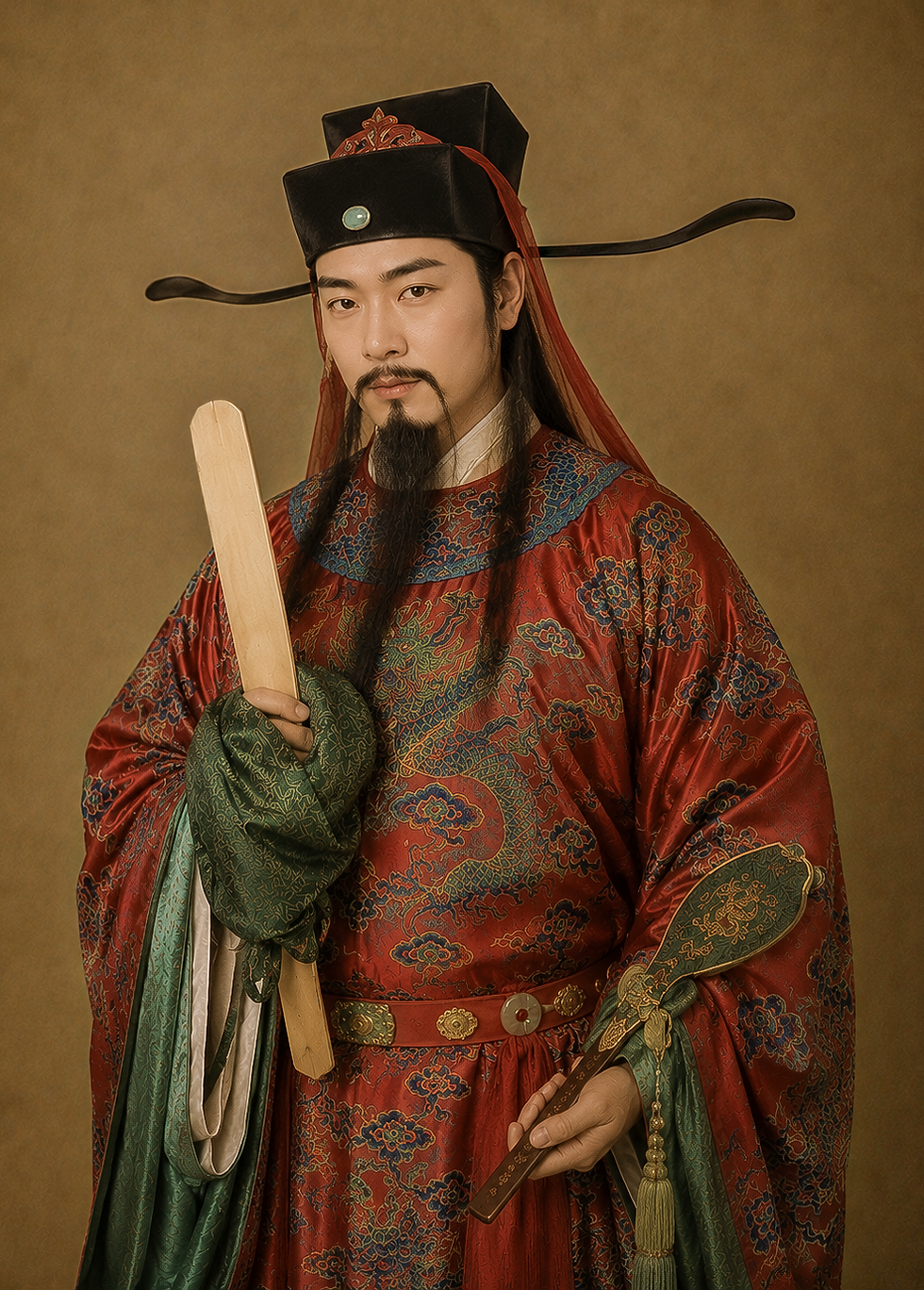

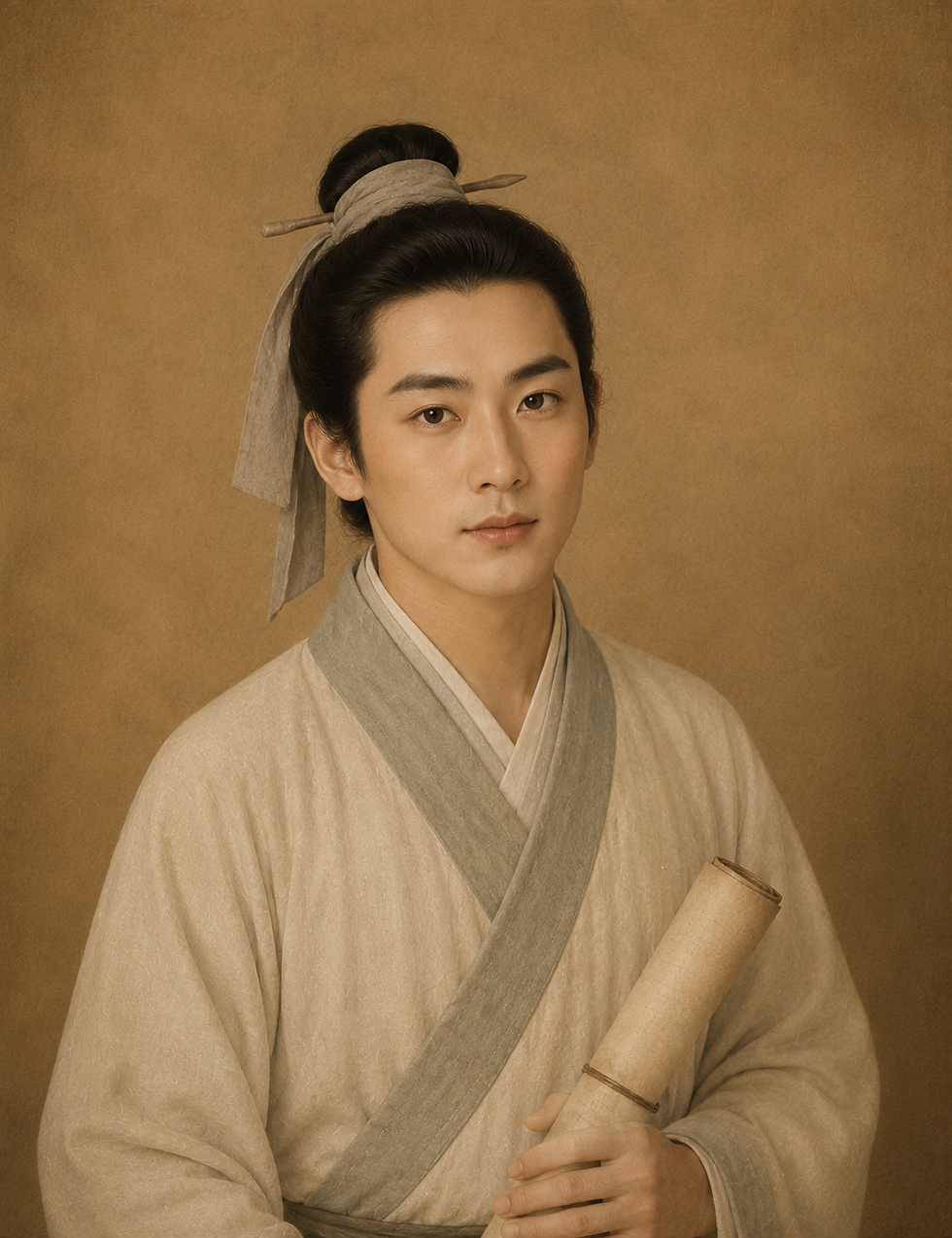
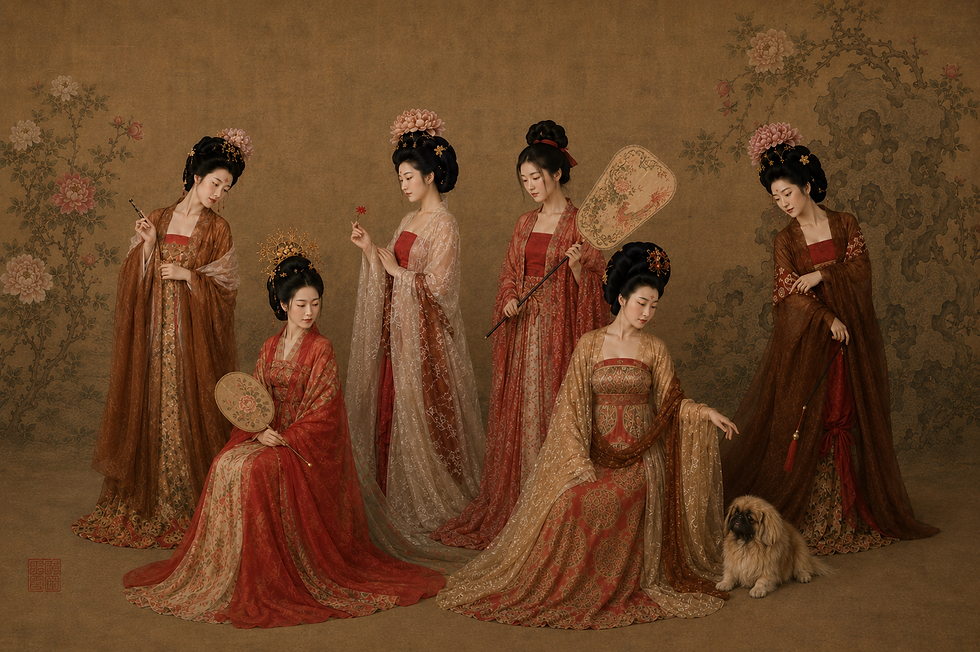
Inspired by one of China’s most enduring legends, this AI-assisted cosplay photography project reimagines the timeless world of Madam White Snake (白蛇传) through a series of painterly, photorealistic character portraits. Rather than recreating a specific film or opera adaptation, the project draws upon the broader artistic traditions surrounding the tale, blending classical Chinese aesthetics with contemporary digital artistry to present the legendary figures as though they had stepped out of an ancient scroll into living reality.
Every portrait was carefully developed to preserve the elegance and symbolism associated with each character. Traditional Hanfu-inspired costumes, authentic hairstyles, embroidered fabrics, jade ornaments, ceremonial staffs, and period accessories were all refined through iterative AI-assisted workflows to create images that feel both historically inspired and cinematically believable. Warm studio lighting, muted earth-toned backgrounds, and restrained colour palettes were chosen to evoke the atmosphere of classical Chinese portraiture while maintaining the realism of modern photography.
At the heart of the collection stands the gentle yet resilient Bai Suzhen (Madam White Snake), whose graceful white robes and serene expression reflect compassion, wisdom, and unwavering devotion. Beside her appears Xu Xian, portrayed as a refined young scholar whose quiet dignity and sincerity embody the humanity at the centre of the legend. Their companion portraits and shared scenes explore the emotional bond that has made their story one of China’s greatest romances.
The collection also celebrates the tale’s larger cast of legendary figures. Xiao Qing (Green Snake) is presented with youthful vitality and emerald tones that hint at her supernatural origins while expressing her fierce loyalty and courage. Fa Hai, the stern Buddhist monk, is depicted with solemn restraint, symbolising duty, discipline, and the moral conflicts that drive the narrative. Additional portraits reinterpret celestial beings, immortals, and mythological guardians connected with the broader world of Chinese folklore, enriching the visual universe surrounding the White Snake legend.
One of the defining goals of this project was to bridge the visual language of traditional Chinese painting and temple iconography with the realism achievable through contemporary AI-assisted image generation. The original references often feature stylised proportions, symbolic colours, and simplified facial features. Through careful prompt refinement and artistic direction, these elements were translated into lifelike costumes, expressive faces, realistic fabrics, and convincing lighting while preserving the unmistakable identity of each legendary figure.
Although artificial intelligence played a significant role in generating and refining the imagery, every composition reflects deliberate artistic choices regarding costume accuracy, colour harmony, character design, posing, facial expression, and historical atmosphere. The creative process remained collaborative, combining human direction with AI capabilities to transform traditional iconography into richly detailed photographic art.
The photo project is both a celebration of one of China’s most beloved romantic legends and an exploration of how modern AI-assisted visual storytelling can breathe new life into classical literature. By honouring the elegance, spirituality, and emotional depth of Madam White Snake, the project invites viewers to experience these legendary characters through a fresh visual lens while remaining deeply rooted in the cultural heritage that has captivated audiences for centuries.


Comments