


The Crimson Aristocrats 深紅貴族 クリムゾン・アリストクラッツ


Venice, 1768.
On the final night of Carnevale, when the bells of San Marco echoed across the lagoon and the city drowned itself in silk, candlelight, and secrets, two figures emerged from the crimson halls of Palazzo Belladonna.
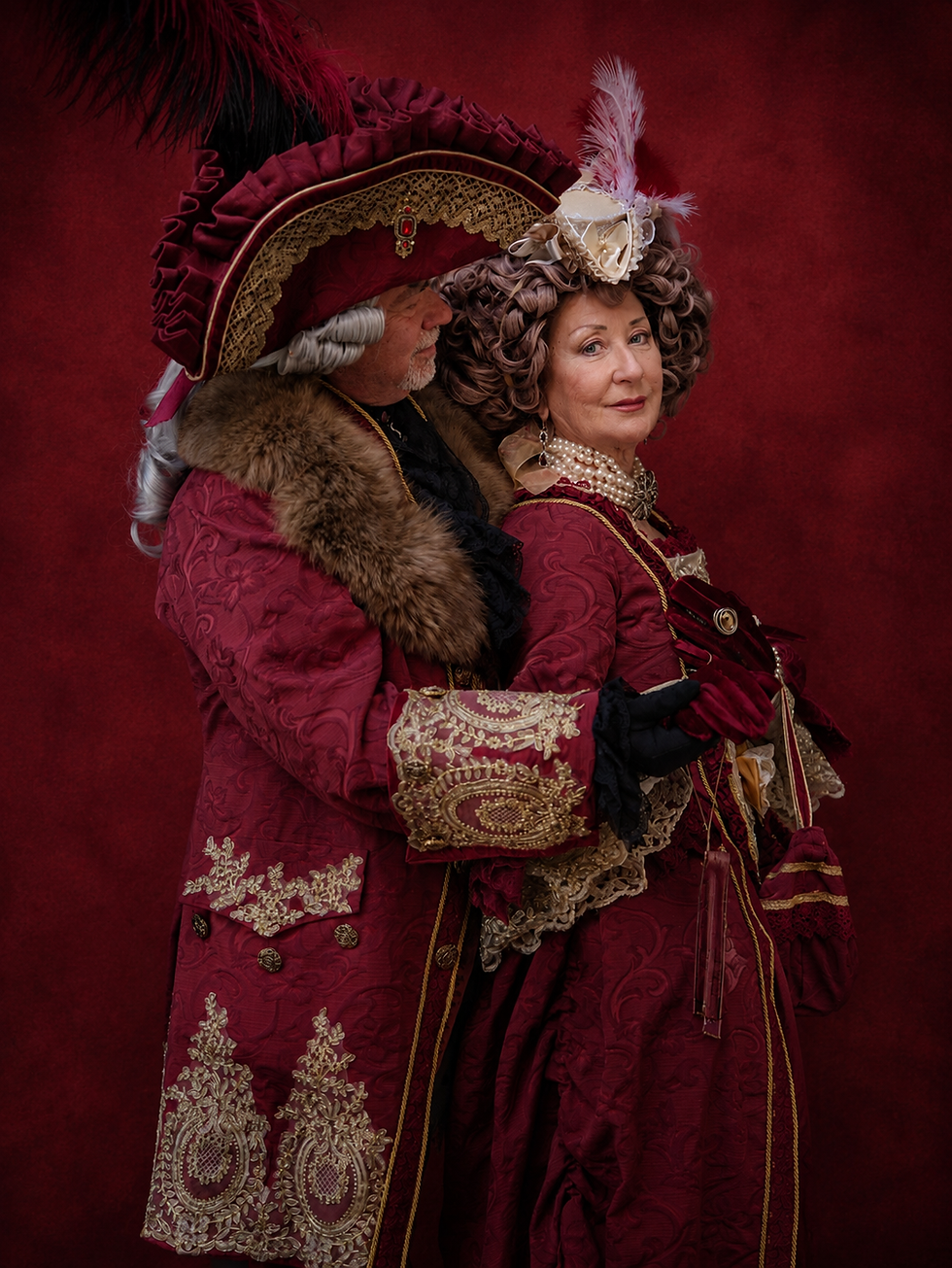
They were known throughout Venice as The Crimson Aristocrats.
Count Alessandro Valieri wore a coat of deep burgundy velvet embroidered with gold thread brought from Constantinople. A fur mantle rested upon his shoulders like the pelt of some ancient beast, and beneath his tricorn hat his silver curls framed the stern face of a man who had survived wars, duels, and betrayals. Beside him stood his wife, Contessa Seraphina Valieri, radiant in crimson lace and pearls, her powdered curls adorned with scarlet feathers that swayed like flames in the winter wind.
Some whispered they were the richest nobles in Venice.
Others believed they were cursed.
For twenty years, the couple had appeared only during Carnevale, vanishing from society once Lent arrived. No servant dared speak of what happened behind the blackened gates of their palace near the Grand Canal. Gondoliers crossed themselves whenever they passed its windows at night, for strange music drifted from within long after midnight — harpsichords playing melodies no living composer had written.
That year, Venice itself trembled beneath uncertainty.
The old republic was weakening. Merchants spoke of foreign empires rising beyond the sea. Nobles drowned their fears in masked celebrations while spies moved silently through the salons of Europe. Yet inside the golden theatres of Venice, people still danced as though beauty alone could hold back time.
On the night of the Red Moon Ball, the Valieris arrived at Teatro La Fenice by gondola. The canal shimmered beneath crimson lanterns, reflecting the city like spilled wine upon black silk. Every eye turned toward them as they ascended the marble staircase.
Seraphina carried a secret beneath her jeweled gloves.
Hidden within a ruby ring was a map — a map leading to a forgotten treasury buried during the plague years beneath the flooded catacombs of Venice. It was said the treasure contained not gold, but documents capable of destroying powerful aristocratic families across Europe.
Many wanted it.
Including Prince Lorenzo Morosini, a ruthless Venetian nobleman who had spent years hunting the Valieris through whispers, spies, and assassins.
That evening, while violins cried beneath crystal chandeliers, Lorenzo approached Seraphina during the minuet.
“You cannot hide forever,” he murmured behind his silver mask.
Seraphina smiled faintly.
“In Venice,” she replied softly, “everyone hides forever.”
Before Lorenzo could answer, the candles suddenly extinguished.
Darkness swallowed the ballroom.
A scream echoed.
Then another.
When the chandeliers reignited moments later, Prince Lorenzo lay collapsed upon the marble floor, a crimson rose placed upon his chest. The Valieris had vanished.
Panic swept through the theatre. Nobles fled into the fog-covered streets while masked guards searched every bridge and canal. Yet no trace of the couple could be found.
Only a single gondolier claimed to have seen them.
He swore that near midnight, beneath the Bridge of Sighs, a black gondola passed silently through the mist. Inside sat the Crimson Aristocrats, untouched by age or fear, illuminated only by the blood-red moon above Venice.
The woman stared back toward the city with sorrow in her eyes.
The man whispered something to the gondolier as they disappeared into the lagoon:
“Empires fade. Beauty dies. But Venice remembers.”
By dawn, both the couple and Prince Lorenzo’s body had vanished.
And from that night onward, whenever Carnevale returned and the city dressed itself once more in scarlet silk and candlelight, people claimed they could still glimpse two crimson figures wandering through the fog of Venice — eternally elegant, eternally mysterious, forever dancing between history and legend.

The Venice Carnevale is not solely about masks. Local Italians and an increasing number of foreign costumers now prefer historical costumes or painted faces. During Carnevale, the whole Venice becomes a real life theatrical stage...


Comments