


Guinea Fowl 珍珠雞 ホロホロチョウ
- Robin Yong

- 4 days ago
- 5 min read

Guinea fowl are birds of the family Numididae in the order Galliformes. They are endemic to Africa and rank among the oldest of the gallinaceous birds. Phylogenetically, they branched off from the core Galliformes after the Cracidae (chachalacas, guans, and curassows) and before the Odontophoridae (New World quail). An Eocene fossil lineage Telecrex has been associated with guinea fowl; Telecrex inhabited Mongolia, and may have given rise to the oldest of the true phasianids, such as blood pheasants and eared pheasants, which evolved into high-altitude, montane-adapted species with the rise of the Tibetan Plateau. While modern guinea fowl species are endemic to Africa, the helmeted guinea fowl has been introduced as a domesticated bird widely elsewhere.


The insect- and seed-eating, ground-nesting birds of this family resemble partridges, but with featherless heads, though both members of the genus Guttera have a distinctive black crest, and the vulturine guinea fowl (Acryllium vulturinum) has a downy brown patch on the nape. Most species of guinea fowl have a dark grey or blackish plumage with dense white spots, but both members of the genus Agelastes lack the spots. While several species are relatively well known, the plumed guinea fowl and the two members of the genus Agelastes remain relatively poorly known. These large birds measure 40–71 cm (15+1⁄2–28 in) in length, and weigh 700–1,600 g (1 lb 9 oz – 3 lb 8 oz). Guinea hens weigh more than guinea cocks, possibly because of the larger reproductive organs in the female compared to the male guinea fowl. Also, the presence of relatively larger egg clusters in the dual-purpose guinea hens may be a factor that contributes to the higher body weight of the guinea hens.

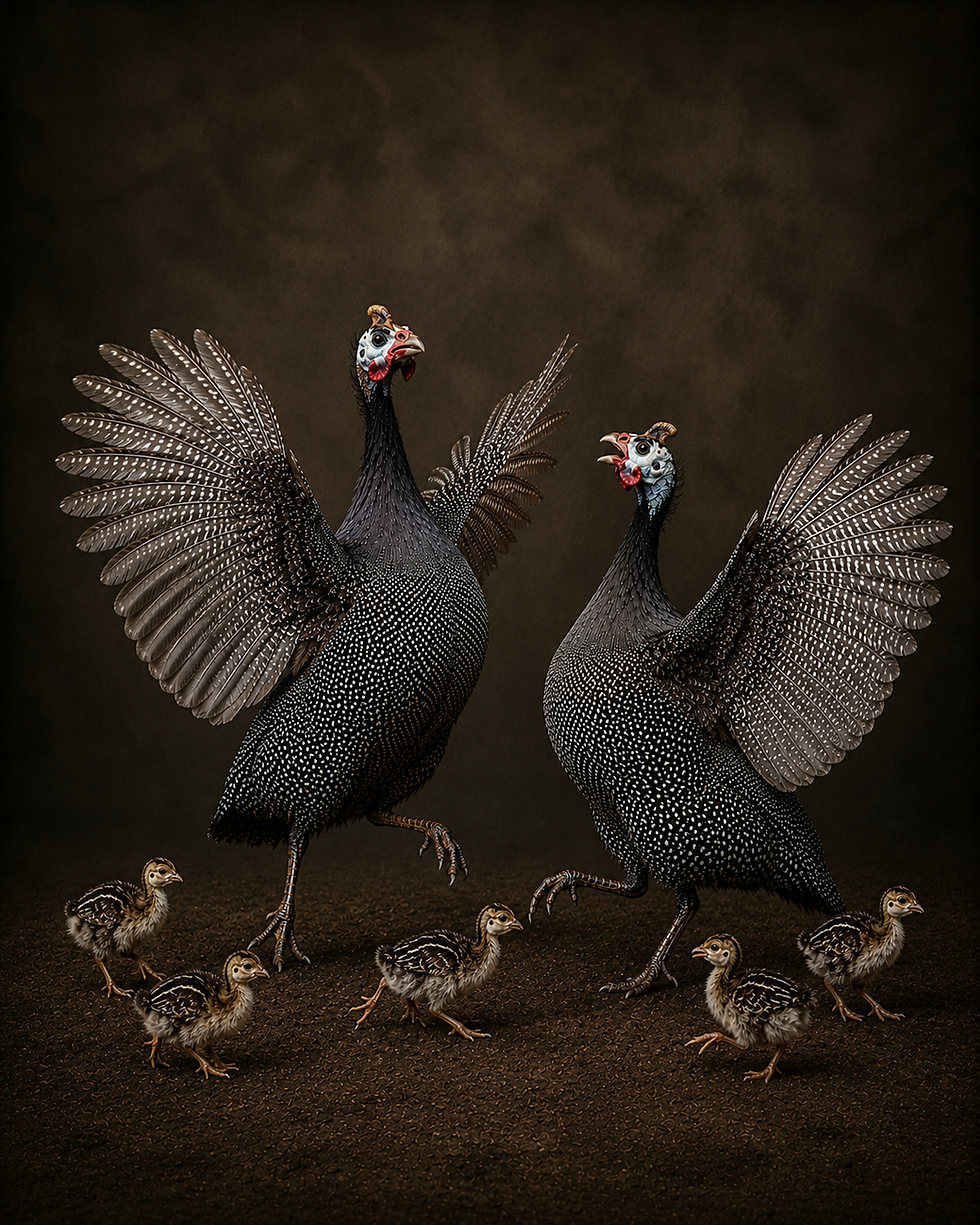
The species for which information is known are normally monogamous, mating for life, or are serially monogamous; however, occasional exceptions have been recorded for helmeted and Kenya crested guinea fowl, which have been reported to be polygamous in captivity. All guinea fowl are social, and typically live in small groups or large flocks. Though they are monogamous, species of the least-derived genera Guttera, Agelastes, and Acryllium tend toward social polyandry, a trait shared with other primitive galliforms such as roul roul, and Congo peafowl.
Guinea fowl travel behind herd animals and beneath monkey troops, where they forage within manure and on items that have fallen to the understory from the canopy. They play a pivotal role in the control of ticks, flies, locusts, scorpions, and other invertebrates. They pluck maggots from carcasses and manure.
Wild guinea fowl are strong flyers. Their breast muscles are dark (aerobic metabolism), enabling them to sustain themselves in flight for considerable distances if hard-pressed. Grass and bush fires are a constant threat to them and flight is the most effective escape.
Some species of guinea fowl, like the vulturine, may go without drinking water for extended periods, instead sourcing their moisture from their food. Young guinea fowl (called keets) are very sensitive to weather, in particular cold temperatures.
Guinea hens are not known to be good mothers, but in the wild, the guinea hen's mate (a guinea cock) may help tend the young keets during the day by keeping them warm and finding food. Sometimes, more than one cock helps raise the young. Guinea fowl (hens and cocks together) make good parents. During warm weather, the cock is unlikely to sit on the keets during the night (leaving that duty to the hen), but may help the hen keep them warm at night when temperatures drop below freezing.
Guinea fowl may be trained to go into a coop (instead of roosting in trees) when very young. Once hatched and ready to leave the brooder (around three weeks), they may be enclosed in a coop for at least three days so they learn where "home" is. When guinea parents (that already roost in a coop) raise their own keets, the hen sits on them outdoors at night, but then the parents teach the keets to also go into the coop in the evenings around three weeks of age.
Males and females have different calls, which can be used to differentiate between them. Unlike chickens (which generally do best with one rooster for a flock of hens), guinea fowl do well with one cock for each hen.
Guinea fowl have been shown to act as a deterrent to foxes. Due to the spread of Lyme disease from ticks, guinea fowl are often kept because they will eat the ticks.

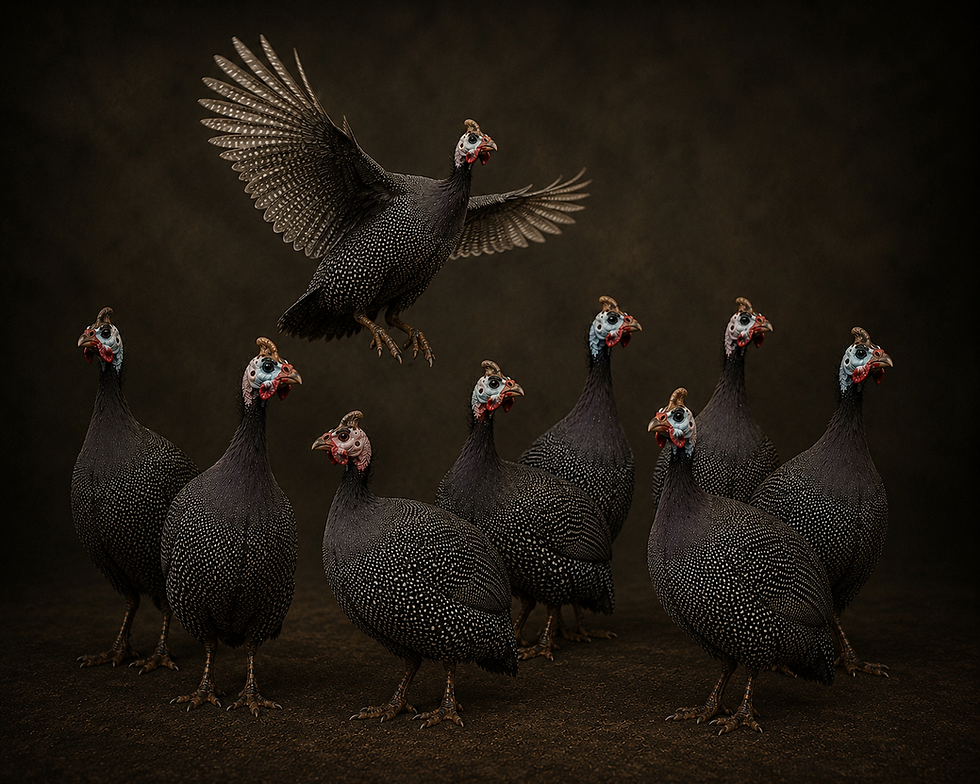
Guinea fowls symbolize vigilant protection, community, and abundance. Rooted in African folklore, these highly alert and vocal birds represent healthy boundaries, intuition, and the courage to adapt to change. Their striking, speckled feathers are frequently used as protective talismans to ward off misfortune.
Often overshadowed by more celebrated birds such as peacocks, pheasants, or cranes, the guinea fowl possesses a unique beauty that reveals itself only through careful observation. This AI-assisted photography series seeks to celebrate these remarkable birds through a collection of fine-art portraits inspired by the aesthetics of classical wildlife photography and Old Master portraiture.
Set against a rich, dark studio backdrop, each portrait isolates the guinea fowl from its natural surroundings, allowing viewers to appreciate the extraordinary details that are often overlooked. Their finely spotted plumage resembles intricate beadwork, while the contrasting powder-blue skin, crimson wattles, and horn-like casque create an appearance that is both ancient and regal. Soft directional lighting emphasizes the remarkable textures of the feathers, scales, and facial features, giving each bird an almost sculptural presence.
The collection explores the many facets of guinea fowl life. Individual portraits highlight their quiet dignity and distinctive personalities. Paired compositions capture their social nature and strong flock bonds, while larger group portraits reveal the fascinating dynamics of these highly communal birds. Images of adults interacting with their chicks celebrate the tenderness of family life, and dynamic wing-spread compositions freeze moments of movement that reveal the impressive structure and beauty hidden beneath their folded feathers.
Rather than documenting guinea fowl as farm animals, this project presents them as worthy artistic subjects. Every composition is carefully designed to balance elegance, realism, and emotional resonance, encouraging viewers to see these familiar birds from a fresh perspective. Their inquisitive expressions, alert posture, and beautifully patterned feathers transform ordinary barnyard residents into subjects of timeless portraiture.
Created through a blend of artistic direction and advanced AI image generation, this series demonstrates how emerging technologies can be used to explore wildlife portraiture in new ways while remaining grounded in the visual language of traditional photography. The emphasis throughout is on natural anatomy, lifelike feather detail, authentic lighting, and carefully considered composition, producing images that evoke the atmosphere of a professional studio session with living birds.
Ultimately, Guinea Fowl: Portraits of Quiet Majesty is an invitation to pause and appreciate the extraordinary beauty hidden within the everyday. By presenting these charismatic birds with the same care and reverence often reserved for more iconic wildlife, the series celebrates the richness of nature and reminds us that elegance can be found in the most unexpected places.


Comments