


Vampires in Venice 威尼斯の吸血鬼
- Robin Yong

- Mar 9
- 5 min read
Updated: Apr 3

Venice, with its labyrinthine canals, shadowed alleys, and timeless allure, has long been a city that inspires stories of mystery and the supernatural. Among the many legends that swirl through its foggy streets, the myth of vampires in Venice holds a particularly captivating place. This theme merges the city’s gothic ambiance with the classic vampire lore, creating a rich tapestry of eerie narratives and cultural intrigue.
The idea of vampires in Venice is not rooted in historical fact but rather in the fertile imagination of storytellers who have drawn on Venice’s unique atmosphere. The city’s decaying palazzi and dimly lit bridges evoke a sense of otherworldliness, perfect for tales of creatures that live in the shadows and hunt by night. In literature and film, Venetian vampires are often depicted as elegant yet sinister beings, blending seamlessly into the opulent and sometimes decadent Venetian society of the past.
Historically, Venice was a bustling hub of trade and culture, and its isolation as a city built on water added to its mystique. The fear of the unknown, combined with superstitions about death and the afterlife, may have contributed to the allure of vampire stories. These creatures symbolize the eternal struggle between life and death, and their fictional presence in Venice taps into deep-seated human fears and fascinations.
Today, the motif of vampires in Venice continues to inspire novels, movies, and even themed tours, inviting visitors to explore the city through the lens of gothic fantasy. While the vampires themselves remain figures of folklore, their stories enhance the magical and enigmatic charm that Venice exudes, reminding us that some places are forever linked to the tales told within their shadows.

On certain nights in Venice, when the fog rises from the canals and the moon turns the color of blood, the old people say the city remembers. It remembers the dead. And sometimes… the dead return.
The Arrival:
In the autumn of 1897, a strange nobleman arrived in Venice under the name Count Dracula. He came by a black gondola at midnight, gliding silently through the Grand Canal while the bells of San Marco rang twelve times. The gondolier later swore he never heard the passenger breathe. The count took residence in a crumbling palazzo near the shadowed canals behind Campo Santa Maria Formosa. The house had been abandoned for decades after its previous owner mysteriously vanished. Within weeks, whispers began. People disappeared.
A baker’s daughter.
A traveling violinist.
A young priest from Murano.
Their bodies were found pale as marble along the canals, two small wounds on their necks. The police blamed thieves.
The priests blamed sin.
But the old Venetian women whispered another name. Il Vampiro.

The Bride of the Night:
Among the living was Lucia Ferrero, a widow known for her haunting beauty and her love of the opera. One evening, after a masquerade ball at a noble palace near Piazza San Marco, Lucia felt someone watching her.
He stood beneath the lanterns.
Tall.
Pale.
Wearing a black coat lined with crimson silk.
His eyes burned like the red moon above Venice. “Signora,” he said with a slow bow. “May I accompany you home?” Lucia should have refused. But something in his voice wrapped around her like velvet. And so she followed him through the narrow Venetian streets, across bridges and shadowed alleys. That night, Lucia Ferrero died. And rose again.


The Night Walkers:
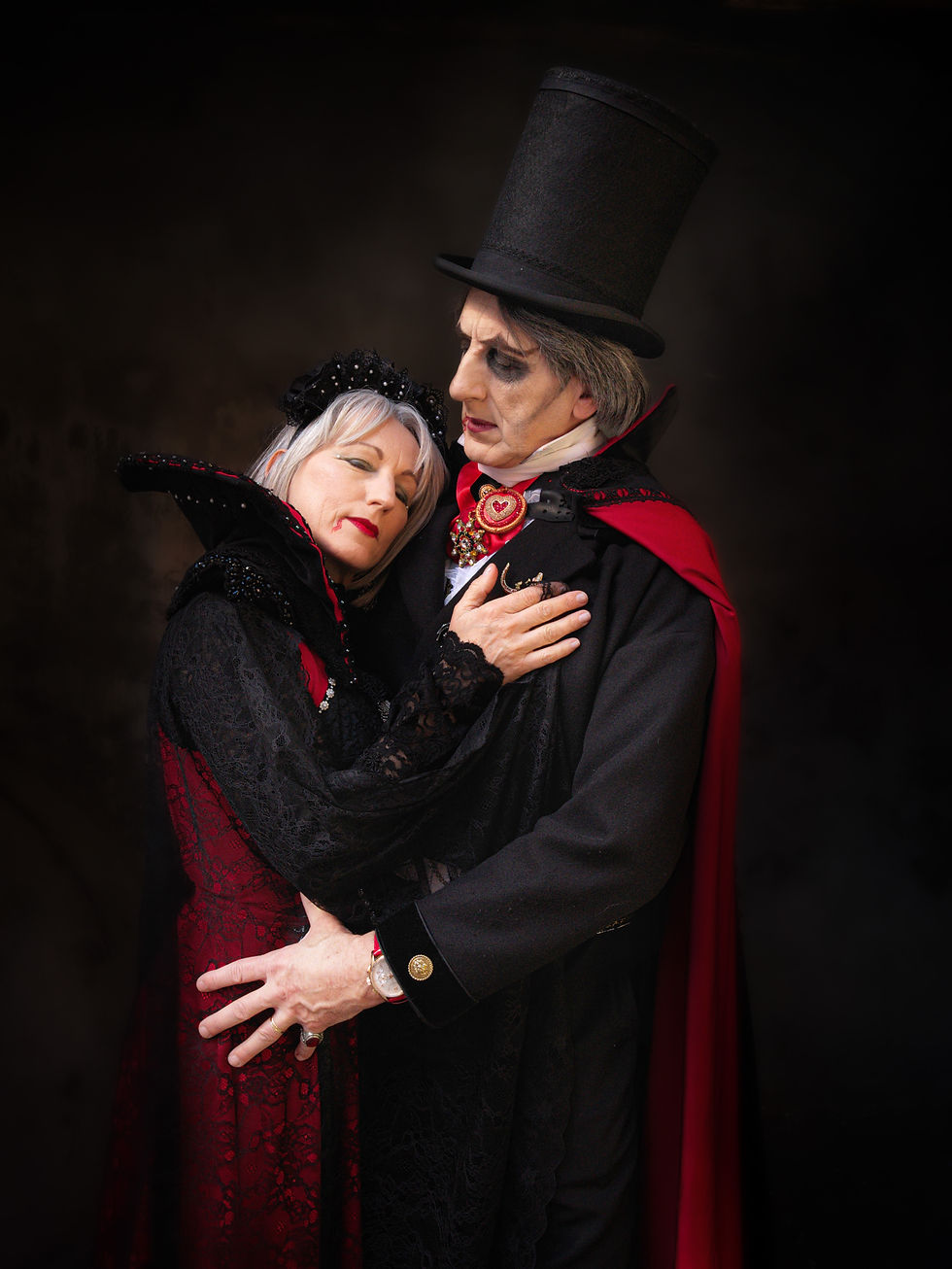
Soon the city changed. The canals grew quiet after sunset. Fishermen refused to work the night waters. Gondoliers would not cross certain bridges. Because sometimes… people saw them. Two figures walking through the fog. A woman in a dark red gown. And beside her, the tall count in his black cloak. Their reflections never appeared in the canal water.

The Hunter:
Not everyone feared the night. A scholar named Professor Vittorio Salviati, who had studied strange folklore across Europe, came to Venice after hearing the rumors. He knew the signs. Bloodless victims. Night wanderers. A nobleman with no reflection. There was only one explanation. Dracula had come to Venice. And worse still— He was building a coven.
The Blood Moon:
The professor discovered Dracula’s plan hidden in ancient Venetian records. Every 300 years, during a rare Blood Moon, the veil between life and death thinned. If Dracula fed upon enough souls before that night… He could transform Venice into a city of the undead. An eternal kingdom of night. The Final Night On the night of the Blood Moon, the fog rolled thick across Venice. The red moon hung enormous above the domes of San Marco. Inside the ancient palazzo, Dracula stood on a balcony overlooking the canals. Beside him stood Lucia—now pale, beautiful, and eternally hungry. Gondolas drifted silently through the mist like coffins on water. Below them, the professor and a group of priests approached with torches, crosses, and wooden stakes. The hunt had begun. Dracula smiled. “Welcome,” he whispered into the night. The bells of Venice began to ring. And the vampires descended into the fog. Some say the battle ended that night. Others say Dracula escaped into the labyrinth of Venetian canals. Even today, gondoliers avoid certain waters after midnight. Because sometimes… When the moon turns red over Venice… Two figures can still be seen walking the bridges. A pale woman in crimson. And the dark count beside her.
Watching.
Waiting.
Hungry.


This year, my Italian friends Daniele Pons and Mascia Ferrero arrive in Venice in their vampire costumes.
The Venice Carnevale is not all about masks. Many local Italians prefer painted faces and historical costumes. For a small number of Venice Carnevale celebrities, it's more about street theatre. Inspiration for the costumes and photos come from the character Dracula.
Dracula is an 1897 Gothic horror novel by Irish author Bram Stoker. The narrative is related through letters, diary entries, and newspaper articles. It has no single protagonist and opens with solicitor Jonathan Harker taking a business trip to stay at the castle of a Transylvanian nobleman, Count Dracula. Harker flees after learning that Dracula is a vampire, and the Count moves to England and plagues the seaside town of Whitby. A small group, led by Abraham Van Helsing, hunts and kills him.
The novel was mostly written in the 1890s, and Stoker produced over a hundred pages of notes, drawing extensively from folklore and history. Scholars have suggested various figures as the inspiration for Dracula, including the Wallachian prince Vlad the Impaler and the Countess Elizabeth Báthory, but recent scholarship suggests otherwise. He probably found the name Dracula in Whitby's public library while on holiday, selecting it because he thought it meant 'devil' in Romanian.
Following the novel's publication in May 1897, some reviewers praised its terrifying atmosphere while others thought Stoker included too much horror. Many noted a structural similarity with Wilkie Collins' The Woman in White (1859) and a resemblance to the work of Gothic novelist Ann Radcliffe. In the 20th century, Dracula became regarded by critics as a seminal work of Gothic fiction. Scholars explore the novel within the historical context of the Victorian era and regularly discuss its portrayal of race, religion, gender and sexuality.
Dracula is one of the most famous works of English literature and has been called the centrepiece of vampire fiction. In the mid-20th century, publishers and film-makers realised Stoker incorrectly filed the novel's copyright in the United States, making its story and characters public domain there. Consequently, the novel has been adapted many times. Count Dracula has deeply influenced the popular conception of vampires; with over 700 appearances across virtually all forms of media, the Guinness Book of World Records named Dracula the most portrayed literary character.


Comments