


il fiore della laguna 潟湖之花 潟の花
- Robin Yong

- Mar 20
- 4 min read

She stands where water remembers light,
A bloom in silk, in powder blue—
The hush between the dark and dawn,
Where tides confess what hearts once knew.
Her gaze is cast beyond the stone,
Past domes that rise like whispered prayer,
As though the lagoon might speak his name
In drifting winds of scented air.
Sweet peas—soft ghosts of fragile grace—
Unfurl where’er her footsteps fall,
Their perfume laced with memory,
A tender ache that haunts it all.
They bloom for love that would not fade,
For hands once held, now lost to foam,
For vows dissolved in silver waves,
Yet echoing through her silent roam.
Her gloved hand lifts—does she recall
A fleeting touch, a voice, a sigh?
Or does she trace the ghost of time
That lingers where the waters lie?
O Flower of the Lagoon, so fair,
Half dream, half sorrow, wholly true—
You wear the dawn like fragile lace,
And dusk like tears of palest blue.
And still you bloom where none should grow,
A fragrant vow the tides have sworn:
That love, though lost beneath the waves,
Returns each day… reborn, reborn.
il fiore della laguna - The Flower of the Lagoon...
She was not born in Venice—at least, not in the way others were.
They said she came with the tide.
In the quiet hours before dawn, when the lagoon held its breath between night and morning, fishermen would sometimes speak of a fragrance drifting over the water—soft, sweet, and unmistakable. It was the scent of sweet peas, though no such flowers grew upon the brine.
They called it a blessing.
Others called it a warning.
But all agreed: where the scent lingered, she would soon appear.
Her name was Liora.
She moved through the city like a memory painted in silk—powder-blue gowns brushing against marble steps, lace gloved fingers grazing the petals that trailed from balconies. No one knew where she lived, yet she was seen everywhere: along the Grand Canal, beneath crumbling archways, or standing still as a statue while gondolas drifted past.
And always, always, the air around her carried the perfume of sweet pea blossoms.
It was said that the flowers followed her because she had once loved deeply.
Long ago—before whispers replaced truth—Liora had been the daughter of a humble perfumer. Her father distilled fragrances from the rarest blooms, but none captivated her as much as the sweet pea. She claimed its scent held a secret language: hope at dawn, longing at dusk, and farewell at night.
When she fell in love with a gondolier named Matteo, she gifted him a vial of sweet pea essence and told him, “If ever I am lost, follow this scent. It will lead you back to me.”
But Venice is a city that keeps its own counsel.
One evening, beneath a sky the color of fading roses, Matteo vanished into the lagoon. Some said it was a storm. Others said it was something older—something that stirred beneath the waters when love grew too strong, too bright.
Liora waited.
Days turned to weeks, weeks to seasons. She wandered the canals, clutching the last of the sweet pea perfume, her hope dissolving like salt in the sea. And when the vial ran dry, she wept—not for the loss of scent, but for the silence that followed.
That was when the lagoon answered her.
On a night thick with fog, the waters rose without wind. A voice—not heard, but felt—offered her a choice:
To forget… or to become.
To forget Matteo, to live on, to let time bury love as it buries all things.
Or to become something else—something bound to the lagoon, neither living nor gone, a spirit of longing woven into the tides.
Liora chose neither life nor forgetting.
She chose remembrance.
And so she became the Flower of the Lagoon.
Now, wherever she walks, sweet pea blossoms seem to bloom from nothing—spilling over balconies, curling along stone, drifting upon the water’s surface. Their scent carries her story through the city: a fragrance of delicate beauty, fleeting love, and the ache of what endures beyond loss.
Some claim that if you follow the scent at dawn, you may see her standing by the water’s edge, gazing toward the horizon as if expecting someone still.
And on the rarest mornings, when the light breaks just so, a second figure appears beside her—a shadow in the mist, shaped like a man with a gondolier’s oar.
They do not touch.
They do not speak.
But the scent of sweet peas grows stronger then—so strong it almost becomes overwhelming, as if the flowers themselves are trying to bridge the distance between them.
The fishermen no longer call it a warning.
They lower their voices, remove their hats, and let the fragrance pass over them like a quiet prayer.
Because in Venice, where water remembers everything, love does not fade.
It lingers.
It blooms.
And sometimes—if you are very still—you can smell it on the morning air.

"The Flower of the Lagoon" is associated with a specific variety of scented sweet pea called "Turquoise Lagoon" that changes color from rose to turquoise, as well as various water lilies found in similar aquatic environments.
First found in Sicily, they became popular in 19th-century England. Poet John Keats described them as being on "tiptoe for a flight," highlighting their delicate, butterfly-like appearance.
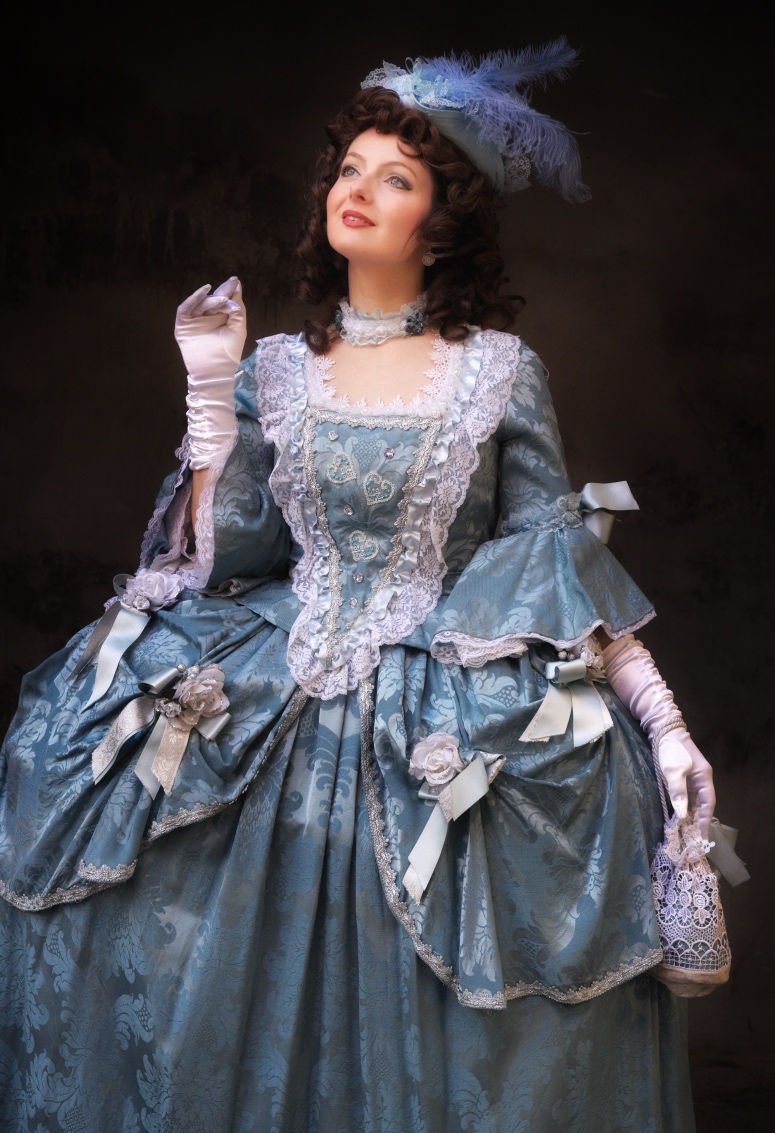
The dress is named after the popular flower…
Just another simple streetside portrait at the Venice Carnevale.
il fiore della laguna is a simple portrait done on the busy streets of Venice during Carnevale.
The Venice Carnevale is not all about masks. Many local Italians prefer painted faces, historical costumes and recently even cosplay. The original portraits were done using only natural lighting against a dark grey wall. A painting of Venice was subsequently added to match the title of the costume.


Comments