


Satyr 薩堤爾

Updated: Apr 22

In Greek mythology, a satyr, also known as a silenus or silenos, is a male nature spirit with ears and a tail resembling those of a horse, as well as a permanent, exaggerated erection. Early artistic representations sometimes include horse-like legs, but, by the sixth century BC, they were more often represented with human legs. Comically hideous, they have mane-like hair, bestial faces, and snub noses and they always are shown naked. Satyrs were characterized by their ribaldry and were known as lovers of wine, music, dancing, and women. They were companions of the god Dionysus and were believed to inhabit remote locales, such as woodlands, mountains, and pastures. They often attempted to seduce or rape nymphs and mortal women alike, usually with little success. They are sometimes shown masturbating or engaging in bestiality.
In classical Athens, satyrs made up the chorus in a genre of play known as a "satyr play", which was a parody of tragedy and known for its bawdy and obscene humor. The only complete surviving play of this genre is Cyclops by Euripides, although a significant portion of Sophocles's Ichneutae has also survived. In mythology, the satyr Marsyas is said to have challenged the god Apollo to a musical contest and been flayed alive for his hubris. Although superficially ridiculous, satyrs were also thought to possess useful knowledge, if they could be coaxed into revealing it. The satyr Silenus was the tutor of the young Dionysus, and a story from Ionia told of a silenos who gave sound advice when captured.
Over the course of Greek history, satyrs gradually became portrayed as more human and less bestial. They also began to acquire goat-like characteristics in some depictions as a result of conflation with the Pans, plural forms of the god Pan with the legs and horns of goats. The Romans identified satyrs with their native nature spirits, fauns. Eventually the distinction between the two was lost entirely. Since the Renaissance, satyrs have been most often represented with the legs and horns of goats. Representations of satyrs cavorting with nymphs have been common in western art, with many famous artists creating works on the theme. Since the beginning of the twentieth century, satyrs have generally lost much of their characteristic obscenity, becoming more tame and domestic figures. They commonly appear in works of fantasy and children's literature, in which they are most often referred to as "fauns".

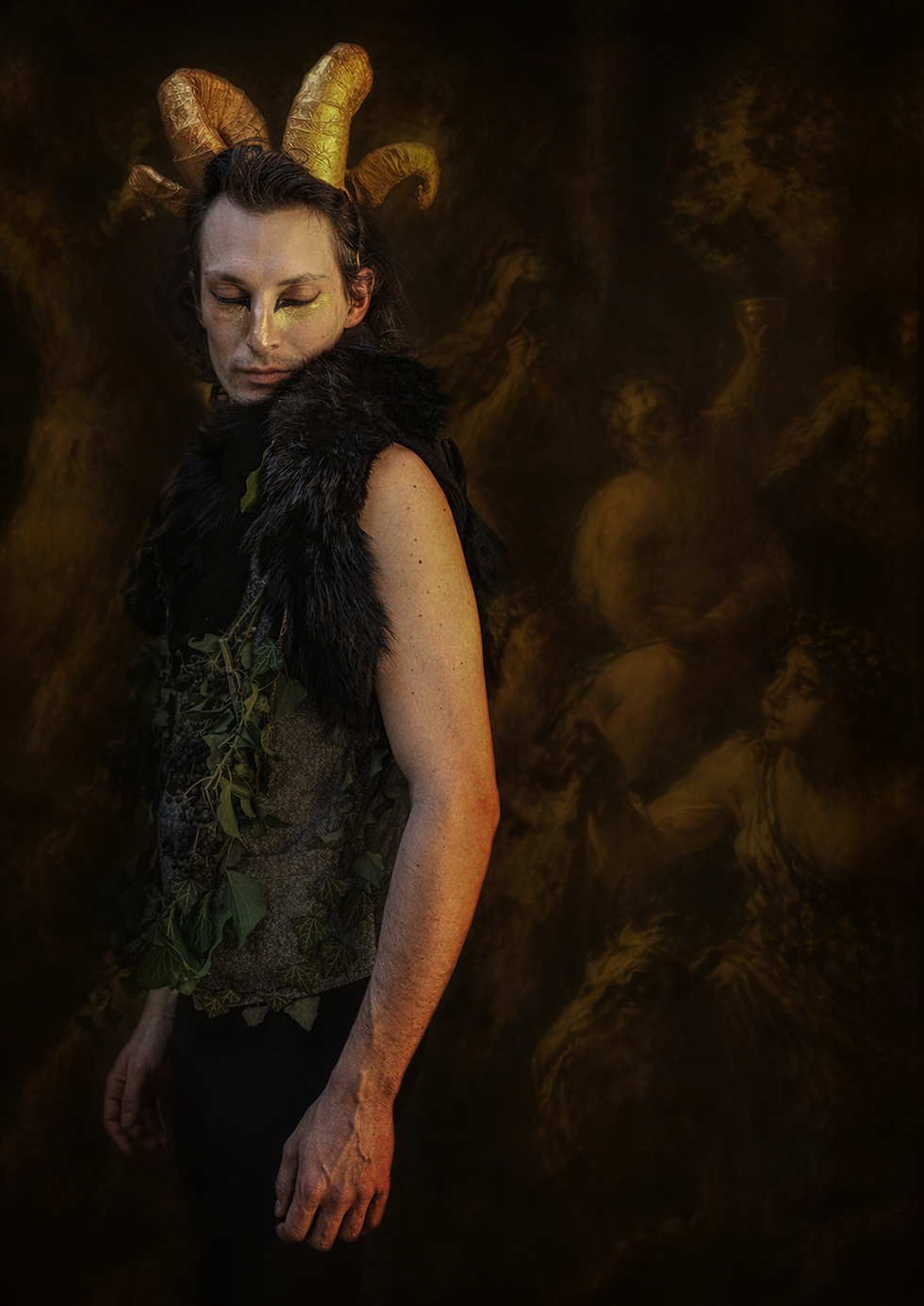

The bells of Venice rang through the winter mist as masked revelers flooded the narrow streets for the annual Carnevale. Lanterns swung above the canals, their reflections trembling like gold serpents upon the black water. Music drifted from palaces and bridges—violins, laughter, secrets.
Yet among the painted masks and jeweled disguises, one figure moved in silence.
He wore no porcelain face, for his own visage was stranger than any crafted by man. Upon his brow curled gilded horns, and around his shoulders lay a mantle of black fur. Ivy and vine clung to his chest as though nature itself had dressed him for the feast. His eyes shone with an ancient knowing, bright as moonlight on wine.
They called him Satyr.
Some said he had stepped from a forgotten painting hidden in a nobleman’s gallery. Others whispered he had risen from the oldest forests beyond the lagoon, crossing the waters only when Venice surrendered itself to madness and masks. Children followed him in awe. Lovers crossed themselves. Priests looked away.
At midnight he entered the grand ballroom of a crumbling palazzo where candles burned in silver candelabra and nobles danced in velvet shadows. No one knew who invited him, yet all parted when he appeared. Even the orchestra faltered.
Satyr walked to the center of the marble floor and raised a goblet of dark red wine.
“Tonight,” he said, his voice deep as earth, “you may wear masks. But dawn will ask who you truly are.”
The room fell still.
One by one, guests removed their disguises. Dukes revealed tears. Courtesans confessed loneliness. Merchants trembled with greed. Poets admitted envy. Beneath silk and feathers, each face was more naked than the last.
Then Satyr laughed—not cruelly, but with wild joy. He seized a violin, played a furious melody, and the ballroom erupted into a dance unlike any ever seen. Nobles leapt like children, widows sang, rivals embraced, and even the statues seemed ready to move.
When morning light spilled across the canal, the revelers found the hall empty. Satyr had vanished. Only a trail of ivy leaves remained, leading to an open balcony where pigeons circled the pale Venetian sky.
And ever since, when Carnevale returns and the bells ring through the fog, people say a horned stranger walks the alleys of Venice.
He comes not to frighten them—
but to remind them that the wildest mask of all is the one worn every day.


Satyr is the new costume by my handsome Italian friend Corradone.
I photographed him against a grey wall just to get a simple portrait, which does well in both its colored and monochrome forms.
Subsequently I used AI to add the painted backgrounds and make a movie poster out of it.


The Venice Carnevale is not all about masks. Many local Italians prefer painted faces/ historical costumes.


Comments